The problem
When operations scale, so do the gaps.
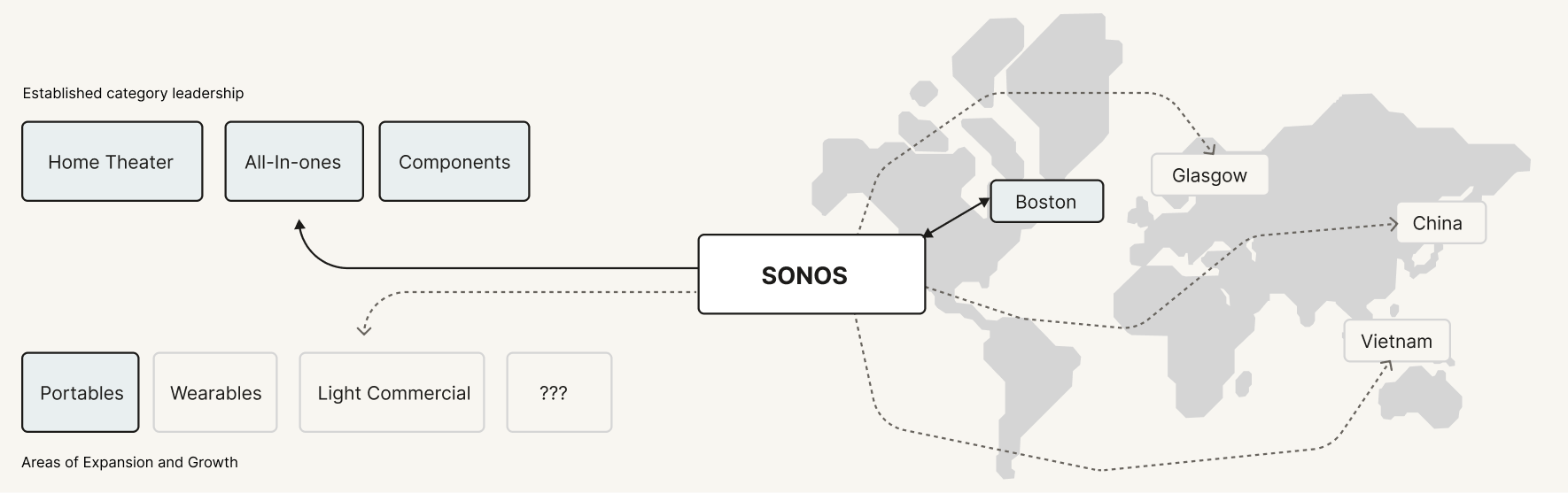
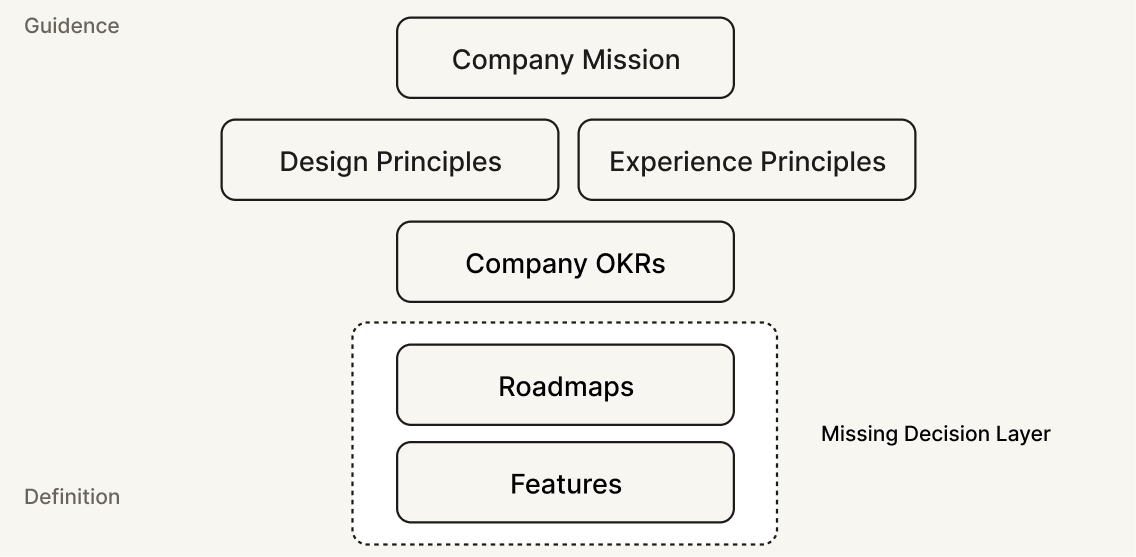
As Sonos expanded into more product categories, offices, and partnerships, more people were making hardware decisions. The organization already had strong UX principles and industrial design guidance, but there was a missing layer between broad experience intent and physical execution.
Hardware UX was still implicit craft. At greater scale, implicit craft becomes inconsistency.
The approach
We turned tacit expertise into shared language.
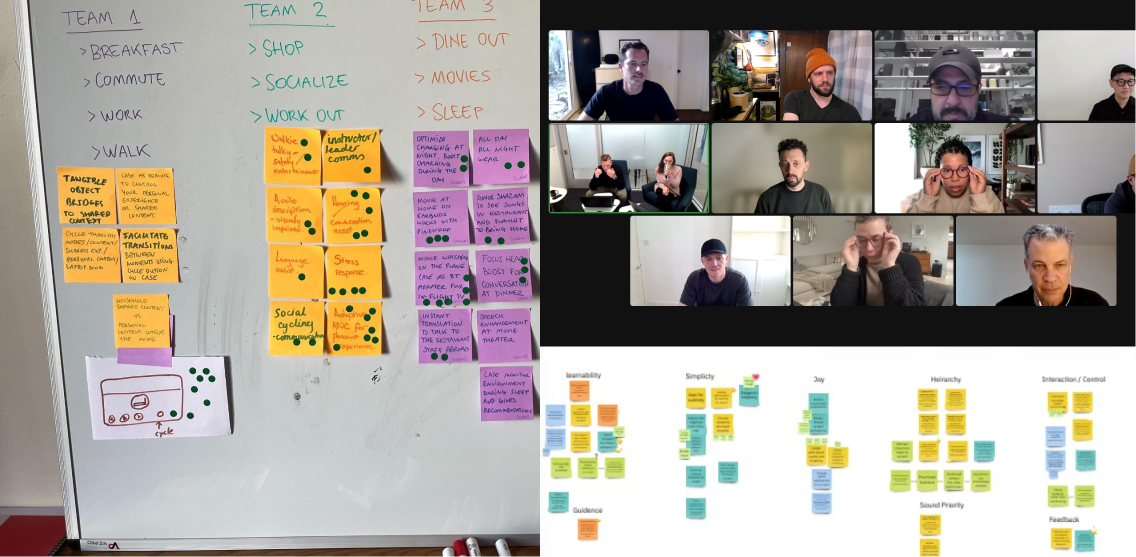
I led a collaborative process that collected examples, compared patterns, surfaced disagreement, synthesized working statements, and tested them against real product decisions. The goal wasn’t another document. It was a common language that designers, product partners, and engineers could use together.
We separated durable experience tenets from practical guidelines. The tenets clarified how Sonos should think about hardware interaction; the guidelines translated that intent into repeatable decisions and implementation practices.
The test
A principle was useful only if it changed a decision.
We connected the framework directly to the product-development process and used active programs to test whether it improved critique, clarified tradeoffs, and created consistency across categories. That kept the work grounded in delivery rather than abstract aspiration.
The process mattered as much as the artifact. The guidelines documented the alignment, but the shared authorship and repeated application created it.
What changed
The organization could make better decisions without me in the room.
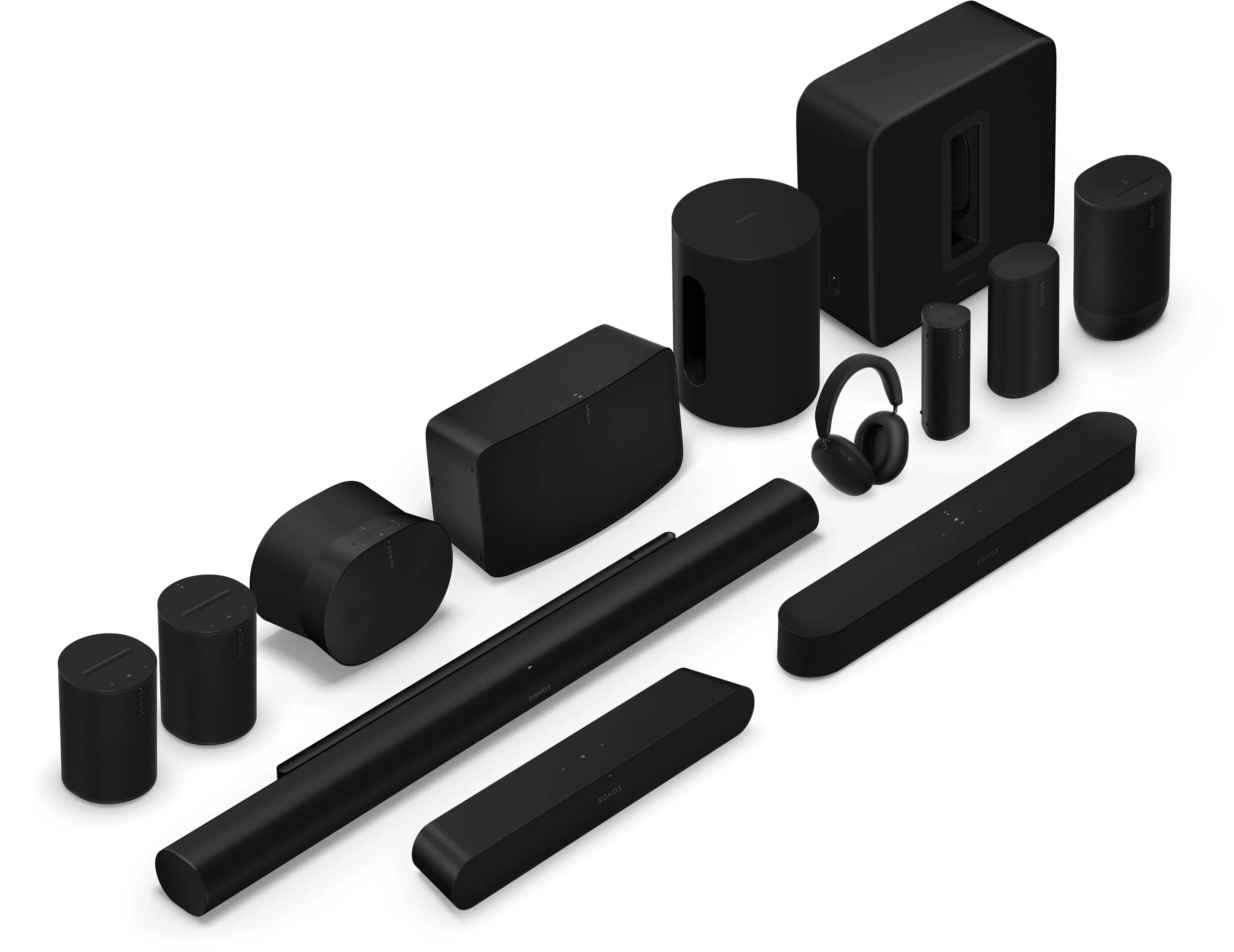
The framework gave teams a durable way to evaluate hardware interactions as the portfolio and organization evolved. It established portfolio-wide standards across Six Product Families and Seven Launches, and shifted quality from individual intuition toward shared organizational capability.