The problem
Everyone wanted the capability. We didn’t agree on what success meant.
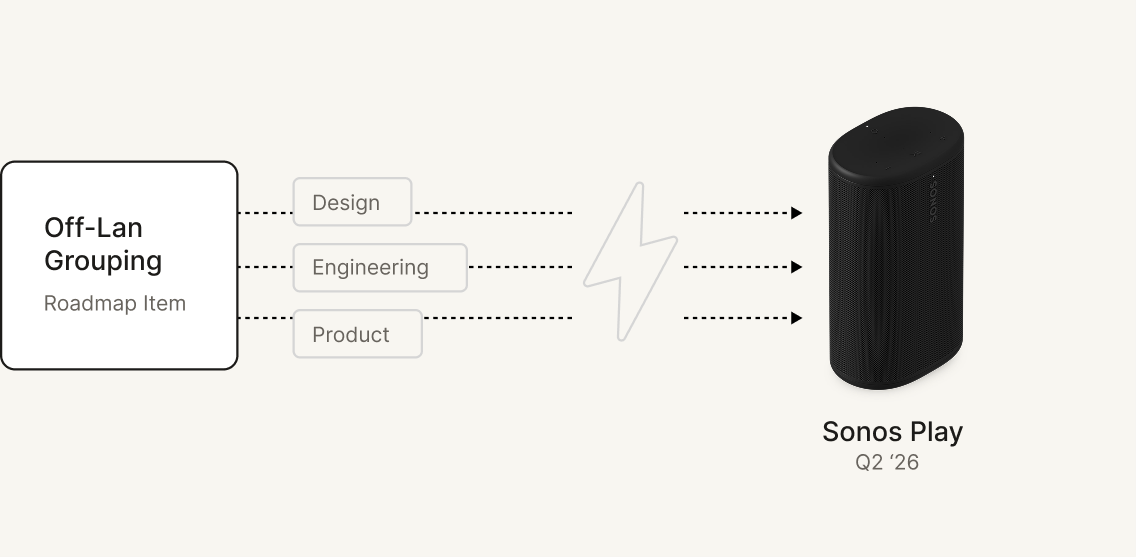
Sonos was reaching new audiences and expanding how existing customers could listen. Grouping products beyond the home was an expected capability, but established customers, new customers, product teams, and security partners brought different assumptions about how it should work.
The project was stuck because the organization was debating solutions before it had aligned on the customer promise.
The approach
I reframed the debate around three customer milestones.
Instead of forcing one solution to satisfy every future scenario, I helped the organization define a sequence of meaningful customer outcomes. The first milestone protected what current Sonos customers already understood. Later milestones could expand capability without compromising that foundation.
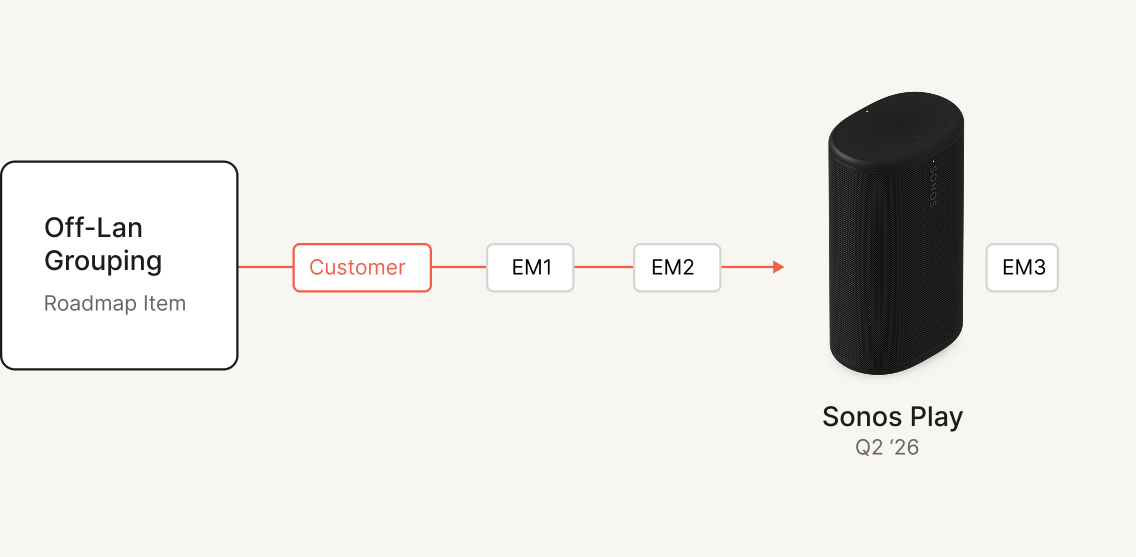
I used that shared framework to align product, design, engineering, and security. It turned competing opinions into sequenced decisions, and gave teams a common way to evaluate scope.
The decision
The same gesture, wherever you listen.
Once aligned, we hit tension. Security needed to protect sensitive data. Design knew grouping needed to feel effortless. I brought the right partners together in a focused working sprint, aligning towards a model that would meet all needs, including our customer.
When schedule and performance pressure threatened the full scope, we protected the complete hardware experience instead of shipping a partial app experience that would teach customers the wrong mental model. We ultimately launched with an experience that was simple, familiar, and secure.
What changed
A table-stakes capability became a distinctly Sonos experience.
The launch delivered the essential customer promise while keeping organizational complexity behind the scenes. Just as importantly, the team left with a shared framework for the next milestones rather than a one-off compromise.
-
Aligned product, UX, security, and engineering around a shared definition of success.
-
Focused launch scope around a complete, understandable customer experience.
-
Sequenced near-term delivery and future capability without losing the core promise.
Nice feature, eh? Want to hear more about the tension, resourcing constraints, and hard decisions we had to make? Let’s chat!